Are Your Kids’ Art Supplies Safe? The Hidden Dangers Lurking in Creative Tools

Updated: Jul 8, 2025
When children pick up their paintbrushes, modeling clay, or watercolors, we see joy, creativity, and imagination at play. But what if those very tools meant to inspire could pose hidden dangers? Many mainstream art supplies contain toxic chemicals that may harm children’s health, making it crucial for parents, teachers, and caregivers to stay informed and make safer choices.
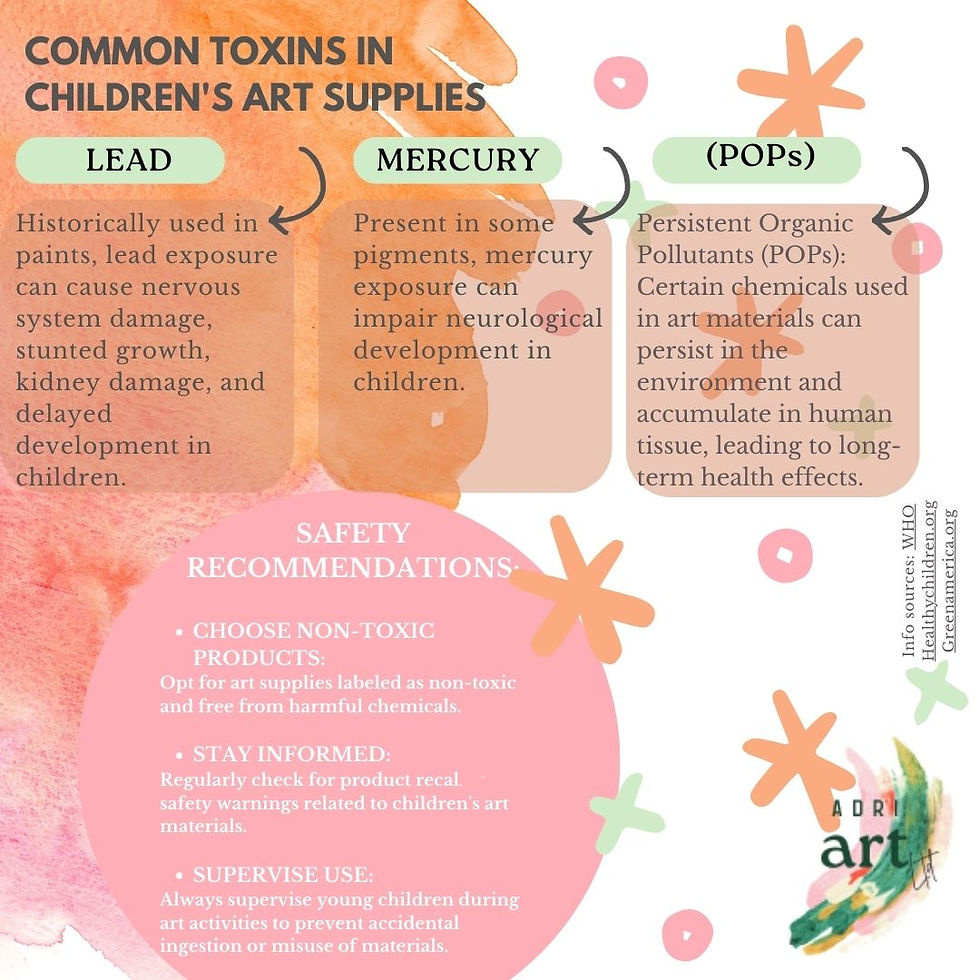
The Hidden Toxins in Art Supplies
Lead – Found in some paints, crayons, and colored pencils, lead exposure can cause learning disabilities, behavioral issues, and developmental delays. According to the World Health Organization (WHO), there is no safe level of lead exposure for children.
Mercury – Present in some pigments and older watercolors, mercury can impact neurological development, leading to cognitive impairment.
Cadmium – A heavy metal used in certain vibrant pigments (yellows, reds, oranges), cadmium exposure is linked to kidney damage and cancer.
Formaldehyde – Common in glue, markers, and some paper coatings, formaldehyde is a known carcinogen that can cause respiratory irritation and allergies.
Volatile Organic Compounds (VOCs) – Found in paints, markers, and adhesives, VOCs release harmful fumes that can trigger asthma and other respiratory problems.
Persistent Organic Pollutants (POPs) – These chemicals, found in some synthetic art materials, can disrupt hormones, weaken immune function, and affect brain development.
Why Are Children More Vulnerable?
Children are far more susceptible to toxins than adults due to their smaller body size, developing organs, and behaviors like putting hands and objects in their mouths. The WHO estimates that 1 in 4 child deaths worldwide is linked to environmental risks, including toxic exposures.
The Shocking Reality: Are Regulations Enough?
While many art supplies claim to be “non-toxic,” regulatory standards can vary, and loopholes may still allow harmful substances in children's products. A 2022 study found that some crayons and paints marketed for children contained traces of heavy metals despite passing safety tests.
How to Keep Your Kids Safe
Choose certified brands – Look for labels like CE, AP (Approved Product), and EN-71 compliance.
Avoid synthetic and solvent-based products – Opt for natural, water-based alternatives.
Read ingredient lists carefully – Be wary of vague terms like “pigments” or “preservatives.”
Ensure proper ventilation – Keep art spaces well-aired to minimize inhaling toxic fumes.
Encourage hand-washing – Teach kids to clean hands after art activities.
Alternatives Exist!
At AdriArt Ltd., we believe that creativity should never come at the cost of safety. Our watercolours use natural binders that are gentle on little hands and provide vibrant, long-lasting colours. Formulated in Europe and tested according to EN71 toy safety standards, they’re designed especially for young artists.
Final Thoughts: A Call for Awareness
As parents, educators, and caregivers, it’s our responsibility to make informed choices about what we put in children’s hands. Spreading awareness about toxic art supplies can lead to better regulations, safer products, and ultimately, a healthier environment for young artists to thrive.
Explore our range at AdriArtLtd.com and follow us on Instagram and Facebook to stay updated!
Sources:
World Health Organization (WHO): Lead Exposure and Health Risks
Environmental Working Group (EWG): Heavy Metals in Children’s Products
European Chemicals Agency (ECHA): Chemical Safety in Art Supplies


Comments